Studying psychology in Italy, which is one of the top places that comes to mind when it comes to university education abroad, has an increasing reputation in recent years. Psychology education, which is the branch of science that studies the human mind and human attitude, will help you learn the basics such as brain and behaviors, developmental psychology, social psychology and communication, clinical psychology, sports and health psychology. Psychologists, who usually provide counselling, help people find the right path in order to examine, perceive and help solve behavioral disorders. Although motivation is an important part of the job, the main area of interest is the subconscious mind, in other words, psychology.

Psychology education in Italy is given in undergraduate, graduate and doctoral levels, as well as in Italian and in English. The first educational institution that comes to mind when talking about the Undergraduate degree Psychology education in Italy is the University of Padua.
Universities Offering Psychology Education in Italy
Studying psychology in Italy is possible in Italian as well as in English. If you do not rely on your Italian language level, our Italian language course will be sufficient at the beginning. If you have a plan to do a master’s degree in Psychology taught in English in Italy and continue your professional life in Italy, you need to make an agreement with the Italians for the program you are studying.
These are the universities that offer psychology education in Italian and in English in undergraduate, graduate, and doctoral levels:
Studying Psychology in Italian
- University of Cagliari (Undergraduate)
- University of Brescia (Undergraduate)
- University of Padua (Undergraduate, Master’s)
- University of Bergamo (Undergraduate, Master’s)
- University of Florence (Undergraduate, Master’s)
- University of Milan (Undergraduate, Master’s)
- University of Milan Bicocca (Undergraduate, Master’s)
- University of Napoli Luigi Vanvitelli (Master’s)
- University of Messina (Master’s)
- University of Naples Federico II (Master’s)
- University of Palermo (Master’s)
- University of Perugia (Master’s)
Studying Psychology in English
- University of Padua (Undergraduate)
- La Sapienza University of Rome (Master’s)
- University of Rome Tor Vergata (Master’s)
- San Raffaele University (Master’s)
- University of Bologna (Doctorate)
In addition, you can check our article about “Top 500 Italian Universities”.
Undergraduate Education in Psychology at the University of Padua
Undergraduate program at Department of Psychology of University of Padova lasts for 3 years. Its long tradition in experimental psychology has been shaped through contacts with experts in the cognitive sciences, neuroscience, information engineering, physiology and biology. The main research areas of the department are clinical and health psychology, cognitive, behavioral and emotional neurosciences (including neuropsychology and psychophysiology), experimental and cognitive psychology, comparative and evolutionary psychology, ergonomics, human factors, psychophysics, and quantitative and mathematical psychology.
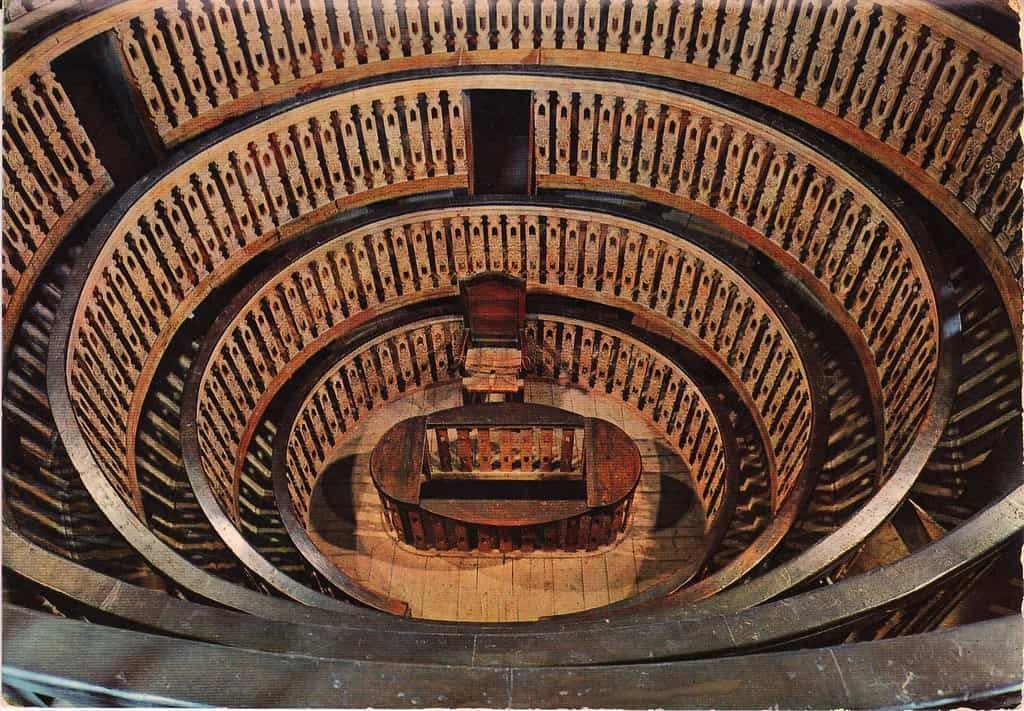
It is an international department where education is organized entirely in English, offering students a basic knowledge of the main areas of psychology, including general, social, dynamic and scientific research methods. As an international environment, the University of Padua connects students wishing to study psychology in Italy with the international labor market through strategic partnership agreements. Students will be able to carry out professional work in the fields of psychometric, psychosocial and developmental assessment, in educational institutions, companies, third sector organizations and human resources management, in public and private structures.
This degree program is designed to provide students with a strong foundation in psychology. It includes both compulsory and optional courses and aims to build the scientific basis for your future studies in psychology and prepare you for work in a variety of sectors. Theoretical learning will be integrated with practical work and experimental activities, so that you will enjoy attending lectures and work in study groups. Seminars and workshops will also be part of the studies. The aim of the University is to encourage its students to take a critical approach to their studies and to gain an international perspective.
For more detailed information, you can take a look at our articles about “Undergraduate Education in Italy” and “Master’s Degree education in Italy“.
Academic Program and Courses
Each academic year consists of two semesters. The knowledge and topics you will learn in these academic years are as follows:
- The first year of the program will include: Basic concepts of psychology, brain and behavior, developmental psychology, social psychology and communication, dynamic psychology.
- The second year will include: Statistical methods in psychology, business and organizational psychology, clinical psychology, animal psychology and neuropsychology.
- The third year will include: genes and behavior, cognition and sensory perception, spatial cognition, language psychology and health psychology.
Each year, students have to choose elective courses to achieve the required amount of credits.
Career opportunities
Graduates of psychology program can find professional employment in public or private institutions, education sector, third sector businesses and organizations.
Under the supervision of a professional psychologist, they might work in health promotion services that concern individual, groups, organizations and communities. All these sectors are concerned with psychometric assessment, psychosocial assistance and human resource development throughout the life.
Moreover, you can read our article about “Job Opportunities After Graduation in Italy”.

Language requirements
This program does not require students to have an English language certificate, only a fluent level of English is required, courses, exams, textbooks and etc. are entirely in English.
Scholarships and fees
The University of Padua offers different types of scholarships to international students.
For more detailed information, you can take a look at our article about “Scholarship Opportunities in Italy”.
If you would like to obtain more information about the Department of Psychology at the University of Padua, please fill out our application form. Our expert consultants will contact you as soon as possible.
Advantages of Studying Psychology in Italy
- In Italy, the duration of undergraduate education is 3 years and the duration of postgraduate education is 2 years. For this reason, you can finish your education life in a short period of time and take faster steps towards for becoming a psychologist or for working.
- After finishing your university studies in Italy, you get a “blue diploma”. Thanks to this diploma you can find an opportunity to work anywhere in Europe.
- Studying psychology in Italy Compared to other European countries, it is quite economical and of high quality.
- Studying psychology in Italy give you a chance to learn both Italian and English, and you will have an international cultural and social environment with students coming from many different countries.
- Your living costs in Italy will be affordable as your tuition costs are calculated according to your family income.
Studying Psychology in Italy – Application Requirements
The application requirements that candidates who want to study psychology in Italy should pay attention to differ for undergraduate, master’s and doctorate levels:
Undergraduate Entry Requirements for Psychology Education
- Having completed 12 years of education
- Passing the threshold score in university entrance exams
- To get a sufficient score from the SAT Exam (Non-EU applicants residing outside of Italy can deliver their achievements such as awards, language certificates and etc. instead of the SAT certificate. There might also be a Skype interview to assess your language level. However, priority will be given to candidates with SAT test scores.)
- As a foreign language certificate, a valid score from exams such as TOEFL or IELTS is required, but some universities do not require a language certificate.
For more detailed information, take a look at our topic “SAT, TOEFL and IELTS Exams”.
Master’s Entry Requirements for Psychology Education
- You must have graduated from the relevant undergraduate department.
- As a foreign language certificate, a valid score from exams such as TOEFL or IELTS is required. It will be sufficient to have a B2 level certificate in Italian or in English.
- Although the conditions vary according to each university, universities may require a good average for graduate education.
Doctorate Entry Requirements for Psychology Education
Applicants holding at least one of the following academic qualifications, regardless of age and citizenship, are eligible to apply for entry:
- Holding one of the specialization or master’s degrees equal to Laurea specialistica or Laurea magistrale (second cycle master’s degrees)
- Laurea Vecchio Ordinamento (degree achieved according to previous Italian regulations)
- Degree awarded by AFAM (Advanced Artistic and Music Education) institutions.
- Master’s degrees taken abroad that are considered equivalent to the above items
Studying Psychology in Italy – Tuition Expenses

One important detail that every individual who wants to study psychology in Italy is curious about is university fees. University fees in Italy vary between 156 € and 3500 € and based on the family income calculated for each student. According to this situation, scholarship opportunities might be offered based on your family income. Due to the high exchange rate, students usually benefit from a discount on tuition fees and you can also receive an annual scholarship of € 2000 to € 5200. In addition to these, extra discounts and scholarships are also given according to the student’s success and/or daily free meal.
Studying Psychology in Italy – Accommodation Facilities
Accommodation and dormitory facilities are available at majority of universities for students in Italy. There are single, double and studio apartments as well as large apartments for students. Students have accommodation options suitable for almost every budget. If you cannot find a place to stay, some companies contracted by the universities will offer you both dormitories and private houses, apartments, rooms, dormitories, hostels and hotels. Moreover, international students are given priority for dormitories, but the most important thing in this process is to make the registration and application procedures on time and completely.
For more detailed information, please see our article about “Accommodation in Italy“.
Using the Pava Education counselling service will set you on the best route to become a psychologist. Please fill out our application form for studying psychology in Italy and university admission processes without wasting time. Our expert education consultants will contact you as soon as possible.